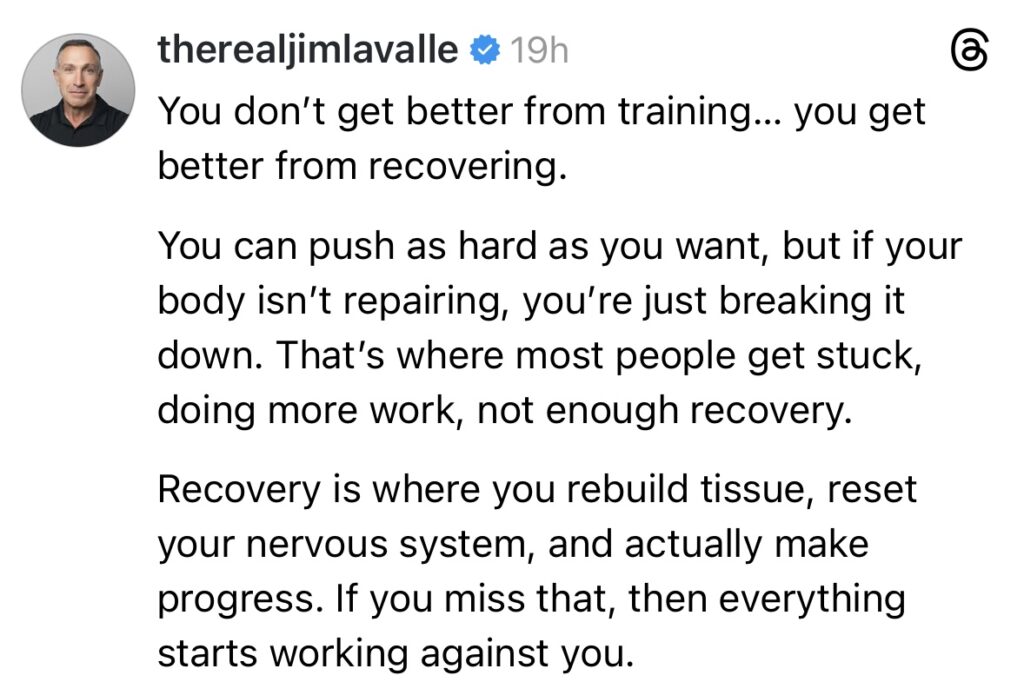
Let me start off with something with something that Dr. Jim Lavalle recently said on his Instagram account. Dr. Lavalle is the best resource I have when it comes to nutrition, supplements, and lifestyle. His expertise is second to none, and you should definitely follow him.
Sleep is When You Recover and Adapt
- Training is the stress
- Recovery is where adaptation happens
- Most of that recovery occurs during sleep (growth hormone release, parasympathetic dominance, reduced nocturnal cortisol, slow-wave deep sleep, etc)
Sleep quality has a big effect at how well you adapt to the stress you apply in training.
So improving sleep quality isn’t just about:
- Falling asleep faster
- Sleeping longer
- Feeling more relaxed
It’s about:
Improving the internal environment that drives recovery from training stress.
Not All “Sleep Aids” Do the Same Thing
Most sleep supplements get grouped into one category:
“Helps you sleep.”
But physiologically, they can work through:
- Neurotransmitter modulation
- Circadian rhythm support
- Stress-response signaling
Each one targets a different bottleneck.
3 Common Sleep Bottlenecks
A. Cortical Hyperarousal
(your brain stays on, thoughts keep cycling, you feel tired but mentally wired)
- Racing thoughts
- High sympathetic tone
- Difficulty falling asleep
System involved:
→ Neurotransmitters (GABA / glutamate balance)
B. Circadian Rhythm Disruption
- Trouble staying asleep
- Irregular sleep timing
- Poor sleep efficiency
System involved:
→ Serotonin / melatonin pathway
→ Sleep pressure regulation
C. Elevated Stress Physiology
- Light sleep
- Non-restorative sleep
- Waking up unrefreshed
System involved:
→ HPA axis
→ Autonomic nervous system balance
Product Comparison Based on Mechanism
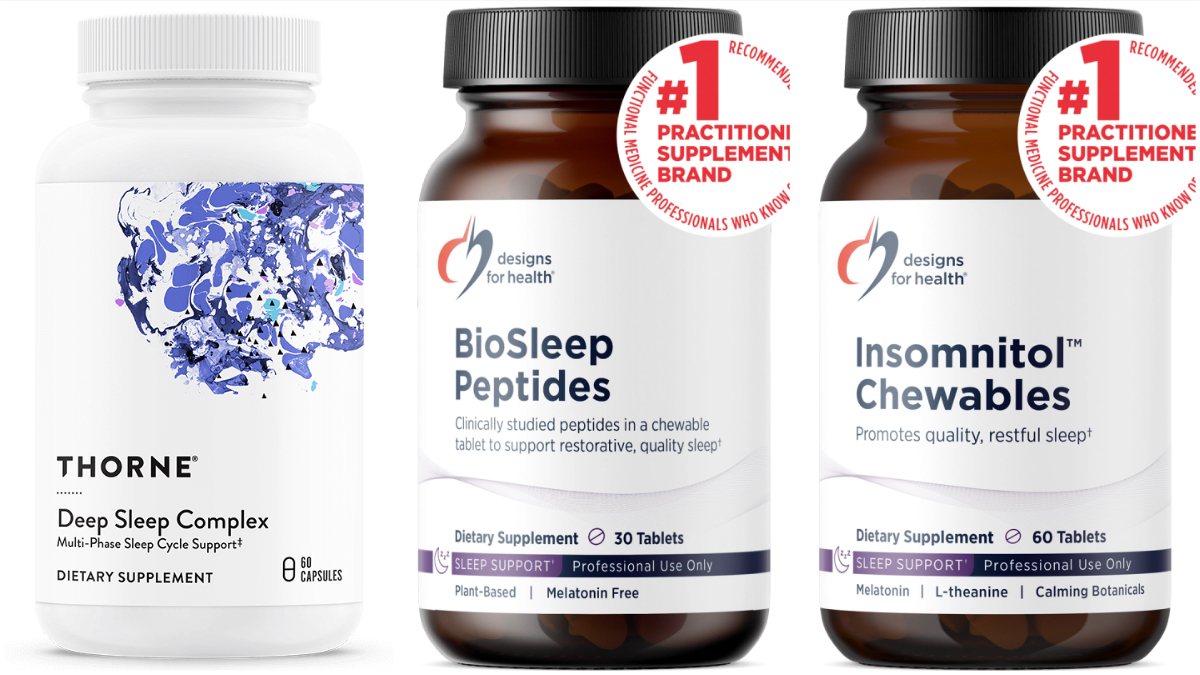
Deep Sleep Complex
Primary Role: Brain State Modulation
Mechanism:
- L-Theanine → increases alpha brain waves
- Apigenin → GABA-A receptor interaction
- Maizinol → melatonin-like signaling
Functional Outcome:
- Reduced sleep latency
- Promotes transition into sleep
- Calms cortical activity
Limitations:
- Doesn’t directly influence sleep architecture
- Doesn’t directly affect recovery physiology
- More about initiating sleep than adapting from it
Insomnitol Chewables
Primary Role: Circadian + Neurochemical Support
Mechanism:
- Myo-inositol
- L-Theanine
- 5-HTP
Functional Outcome:
- Supports serotonin production
- Supports melatonin precursor pathway
- Improves sleep continuity
- May reduce nighttime waking
Limitations:
Still primarily working through:
→ Neurotransmitter tone
→ Circadian rhythm timing
BioSleep Peptides
Primary Role: Stress-Response Signaling
Mechanism:
- Hydrolyzed rice-derived bioactive peptides (PeptiSleep™)
Functional Outcome:
- May influence HPA axis regulation
- May improve autonomic balance
- Supports parasympathetic dominance overnight
- May improve slow-wave sleep depth
This becomes relevant when:
- Training intensity is high
- Recovery demand is elevated
- Adaptation is the goal